
Some time in the mid-1980s, my parents purchased an Atari 2600. I'm fairly certain it was the all-black "Darth Vader" version which came out in 1982, but I don't know if they purchased it new. I specifically remember my mother saying it was my dad's, but I never saw him play it. Instead, we made our wrists sore trying to maneuver character sprites around in various blocky game environments with the stiff and imprecise joystick controller. Aside from playing Oregon Trail on the crappy Tandy TRS-80s at my elementary school, the Atari 2600 set of games was the first I ever played.

I first saw this system at my older second cousin EJ's house, where I saw him play Night Driver. The 2600 we got came with Combat, a two-player (simultaneous) tank and airplane game that had many slightly different modes to choose from. Later on we had plenty of games, some of which were most likely bought at garage sales. Eventually I let some "friends" borrow a few cartridges which were never returned. I liked the simple colors and sounds chosen for games like Berserk, which had no music.
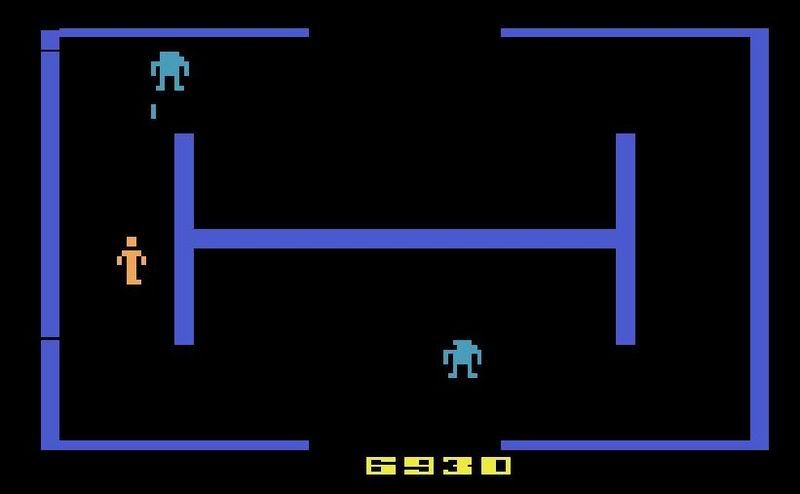
Each session of Berserk began and ended with a short staticky sound, like a small blast from an air compressor, and shots from the enemy sprites sounded low and creepy.
With the 2600, it was more likely that a player would get tired of a game more often, as they were usually just high score contests. You die, then quit or start over, so you'd end up playing less or switching cartridges a lot. This system never malfunctioned or failed, and took a beating well from 5-10 year olds.
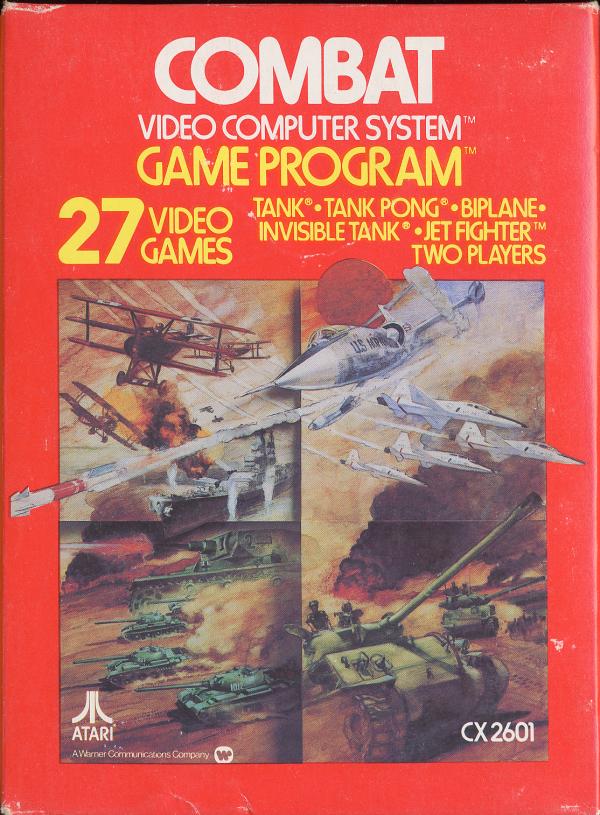
One other memorable aspect of the 2600 was the cartridge and box art. Instead of just simply depicting a rendering of the actual pixel-based gameplay (i.e. a screenshot), companies commissioned artists to produce media to better sell the games, and it worked. Instead of seeing the simple geometric shapes that might make up a character, background and/or enemies, a player might see an awesome portrait instead. Of course, the objects in this series of illustrations never had a chance of matching anything on screen. Later, when graphics became more impressive for games like Pitfall, game companies took a chance and started printing screen shots on the covers of their boxes.
The Lesser-Known 8-Bit 
About a year after Nintendo released the NES, Sega released it's own 8-bit system, the Master System in 1986 in North America. Much like with the Atari 2600, I saw an acquaintance using this system, and then received it as a gift for Christmas some time later; most likely as late as 1988 or 1989. I remember seeing plenty of TV ads for this system, including one where a 40-year-old man shoots a bunch of stuff on screen, takes off his gaming sunglasses and makes a face of satisfaction and approval to the audience:
Although the graphics could in some cases be considered better than the Nintendo Entertainment System, it wasn't anywhere near as popular by any means. There were, however, Master System games such as Altered Beast, which I had and played a lot. Alex Kidd in Miracle World was another game similar to, but more complex than, Super Mario Bros. (for the NES), which seemed almost impossible to beat. The "base system" I was given came with a combination Hang On/Astro Warrior cartridge, one flat rectangular controller (also like the NES), and even had a mini snail maze game built into the system so that you could play a game without a cartridge... in case perhaps someone stole all your games and you still had the system. The cartridges were smaller than those for the Atari 2600, and Sega even added a "card slot" into the base system for playing thinner games as well. Although the SMS was easily surpassed by the NES in terms of hours played, the Sega Master System was entertaining.
Super Box of Power... and Also Cartridge-Blowing
Nintendo released the Nintendo Entertainment System in the US in 1984. Because video game systems usually costed much more upon first release, I didn't hear about the NES until well into the second half of the 80s. Many of my friends had the system, as well as plenty of games I spent hours playing during sleepovers. Usually this entailed hanging out with my friends in the evening, and playing the NES (and later the Super NES) as much as possible, well into the night. My brother received an NES for Christmas one year, and he and I spent many hours playing it. Around this time I was also still using the Sega Master System on my own slowly dying black and white television.

Because so many people eventually had the NES, video rental stores started renting games and systems for the first time. 8-bit games were far more complex than games for previous systems, so a player could spend far more time playing, getting frustrated, punching the television, etc. "Get out of here, you're ruining my concentration!"
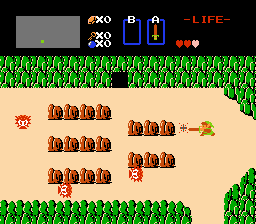
NES games spanned many genres, such as sports (Tecmobowl, Double Dribble), adventure and, RPG (Final Fantasy, The Legend of Zelda), fighting (Double Dragon), and others. Nintendo also seems to have felt obligated to get their players off their asses and introduced the Power Pad, used to play track and running games, which could be considered the forerunner of the Wii controller. The NES also allowed for game progress to be saved and retrieved later by players for the first time (to my knowledge), albeit after performing certain procedures, codes (Mike Tyson's Punch Out!!) very long wait times (coughexcitebikecoughcough). This, along with storylines, allowed for more long-term gameplay and involvement, culminating the "beating" the game, instead of the old high score goal of games an older systems. Players could spend months at a time trying to "beat" almost every game playable on the NES. In combination with the multitude of games offered, discussing games with friends became and every day practice.
Unfortunately, Nintendo wanted to avoid supposed problems of previous systems and decided to give the NES a different design than past systems. As a consequence, putting in a cartridge and turning on the power weren't usually all players had to do to play games, especially after their systems were years old.
"The ZIF connector worked quite well when both the connector and the cartridges were clean and the pins on the connector were new. Unfortunately, the ZIF connector was not truly zero insertion force. When a user inserted the cartridge into the NES, the force of pressing the cartridge down and into place bent the contact pins slightly, as well as pressing the cartridge’s ROM board back into the cartridge itself. Repeated insertion and removal of cartridges caused the pins to wear out relatively quickly and the ZIF design proved far more prone to interference by dirt and dust than an industry-standard card edge connector." - Wikipedia
Various remedies were passed around among people to solve this problem, such as blowing vigorously into a cartridge to "clean the dust out," bashing the side of the console with a hand, or blowing the cartridge slot. The "blinking power light" or "grey screen" problems also caused people to find solutions, such as inserting the cartridge until only its outer edge protruded just over the inner edge of the case inside the game slot, then pushing the cartridge downward as usual, but allowing it to hit the edge of the case on the way down, which usually worked.
 Overall, the NES was a big fucking deal. Music, graphics, game genres, titles, controls, everything. Almost everyone had one, along with tons of games -- the Sega-versus-Nintendo rivalry really hadn't started yet.
After 26 years, there's at least a trivial demand for NES emulators and ROMs so players can keep playing, getting frustrated, punching their monitors, and telling people to leave the room so they can beat an important boss, or Mike Tyson.

No comments:
Post a Comment